


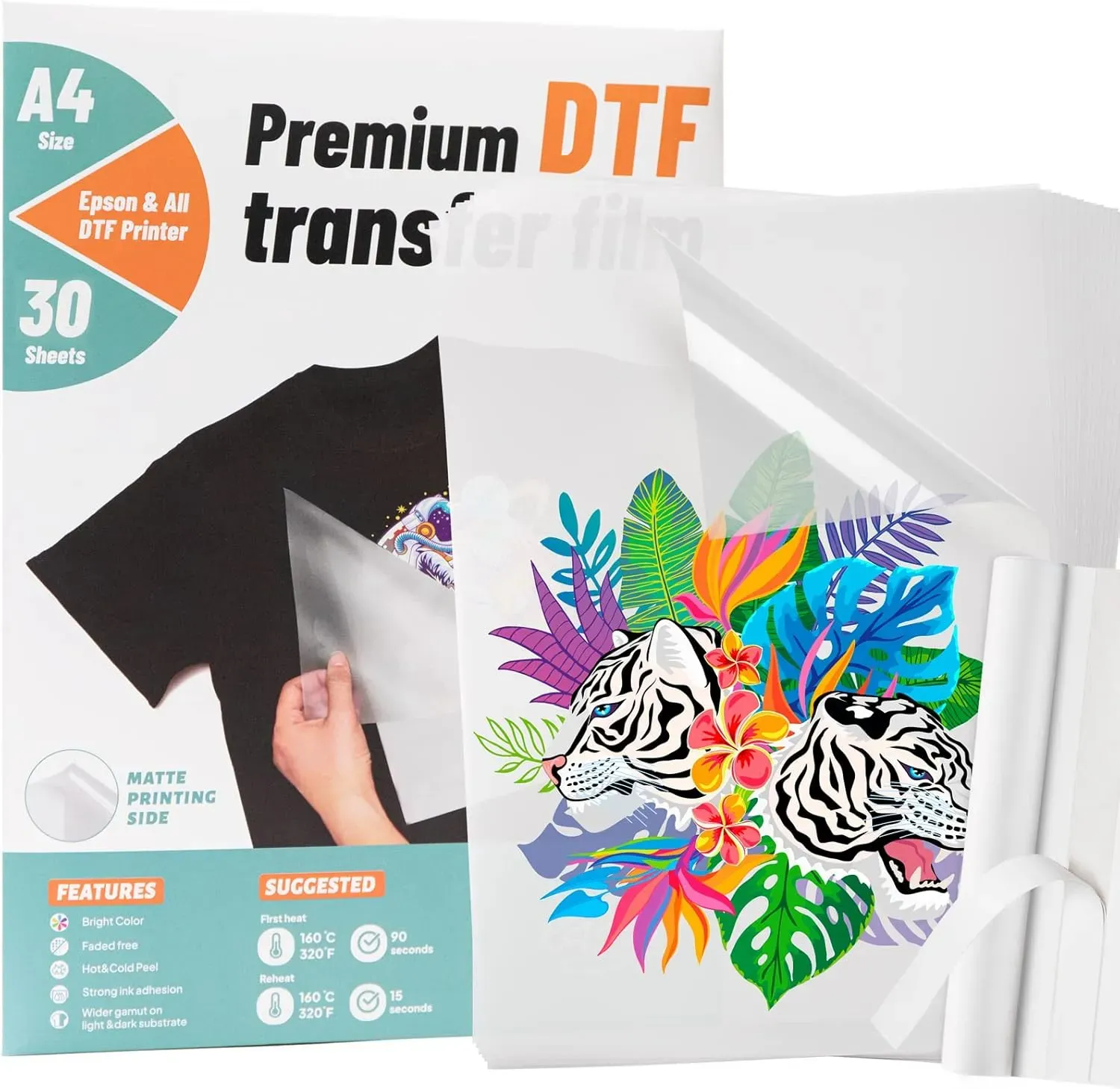
DTF transfer films have transformed fabric printing, delivering bold, full-color designs with flexibility and scalability. This approach aligns with the DTF printing process, a streamlined workflow that avoids large embroidery setups. Understanding how DTF works helps explain why these transfers stay vibrant on cotton, polyester, and blends. Direct-to-film transfers are at the heart of this method, delivering consistent results with efficient setup. The DTF film advantages include strong color fidelity and a soft hand feel, making it a practical choice for both small runs and larger orders.
A film-based garment printing approach, often described as carrier-film transfers, uses a printable layer to carry a design onto fabric. In this workflow, a printer deposits CMYK inks and white underbases onto a transparent film, followed by a fine adhesive powder and a heat-press step. The concept aligns with digital textile printing, where the design is produced on film first and then bonded to cotton, polyester, or blends. Viewed through an LSI lens, terms like carrier film, white underbase, adhesive bonding, and heat-press parameters help explain why this method delivers reliable results.
What DTF transfer films are and why they matter
DTF transfer films are a category of printable carrier films designed specifically for direct-to-film workflows. They act as the temporary vehicle for your artwork, carrying CMYK colors and white ink as needed so opaque designs can sit on any fabric. When heat and pressure are applied, the adhesive behind the printed image bonds the design to the garment, delivering a vivid transfer with a clean release.
Because these films are designed for versatility, they enable vibrant designs across cotton, polyester, blends, and more without the setup required for large embroidery or extensive screens. This is what many practitioners refer to as the core advantage of DTF transfer films: flexibility, scalability, and a short path from concept to finished garment.
The DTF printing process: from design to transfer
The DTF printing process starts with design preparation and color management. Artists separate colors, decide where white underbase will live for dark fabrics, and size the artwork to fit the garment. A printer equipped with DTF inks lays down full-color imagery on the transfer film, forming a crisp image that is ready for the next steps.
Next, a powdered adhesive is applied to the wet ink, then cured to create a durable bond. The finished film is pre-pressed with the garment, placed on the fabric, and subjected to controlled heat and pressure. This sequence—design to film to heated transfer—embodies how DTF works in practice.
How DTF works across fabrics and color ranges
DTF works across a broad spectrum of fabrics because white ink can establish opacity on dark backgrounds, expanding the color gamut beyond standard pigment printing. The result is strong color fidelity and a soft hand when properly cured, which is part of the appeal for designers who need faithful reproductions on tees, hoodies, and blends.
With direct-to-film transfers, you can achieve photography-like details and subtle shading without the heavy setup of other methods. The ability to reproduce full-color artwork, including gradients and fine lines, highlights why many printers rely on CMYK plus white on film for complex graphics.
DTF film advantages for small runs and versatile applications
DTF film advantages shine for small runs and on-demand production. Since there is no minimums or screens to create, shops can offer customized designs, limited editions, or test batches cost-effectively while maintaining high color quality.
The soft hand and flexible adhesion are another key benefit, especially on mixed fabrics like cotton-poly blends. When the transfer is applied with the right heat and time, the result feels like part of the fabric rather than a stiff layer, which helps apparel look and wear better.
Practical steps for a successful DTF transfer workflow
To execute a reliable DTF transfer workflow, start with meticulous pre-press steps: create test swatches on target fabrics, pre-warm the garment to remove moisture, and calibrate heat press settings to match the chosen film.
During transfer, follow the manufacturer guidelines for temperature, pressure, and peel method—hot-peel or cold-peel as required. Aftercare guidance like washing inside-out and avoiding high-heat agitation helps maximize durability.
Quality control, supplier selection, and common pitfalls
Quality control begins with selecting reliable DTF transfer films and compatible adhesives. Look for consistent release from the garment, strong initial bonds, and reliable white opacity that supports vibrant color reproduction on dark fabrics.
Supplier evaluation should include access to swatches, setup guides, and troubleshooting resources. Being mindful of ink compatibility, film variability, and post-press performance helps avoid issues such as ghosting, cracking, or dull colors in finished garments.
Frequently Asked Questions
What are DTF transfer films and how do they fit into the DTF printing process?
DTF transfer films are the printable carrier films used in direct-to-film transfers. In the DTF printing process, artwork is printed on the film with DTF inks (including white for opacity on dark fabrics), a powdered adhesive is applied and cured, then the film is heat-pressed onto the garment. This yields a durable, vibrant transfer that works on cotton, polyester, blends, and more.
How do DTF transfer films compare to direct-to-film transfers in terms of durability and color?
DTF transfer films enable full-color, photographic-quality designs with strong adhesion when properly cured, making the resulting transfers durable through many washes. Direct-to-film transfers are the same general concept, but final results depend on film quality, adhesive, curing, and the printing system; choosing reputable DTF films and following proper process will maximize color fidelity and longevity.
What are the main DTF film advantages for small businesses?
DTF film advantages include versatile compatibility across fabrics, from cotton to blends, and support for full-color designs without minimums. They also deliver a soft hand, easy setup for small runs, and strong color fidelity, making them a practical option for startups and print shops.
What is the typical workflow for using DTF transfer films from design to garment?
Follow the DTF printing process: prepare artwork, print onto the transfer film with white ink as needed, apply and cure the powder adhesive, pre-press the garment, align and heat-press the film, then peel and finish with a brief post-press.
Which fabrics work best with DTF transfer films and how does white opacity influence results?
DTF transfers work well on cotton, polyester, blends, and many fabrics; white ink is printed beneath colors to provide opacity on dark garments. This white opacity expands the color gamut and yields vibrant, durable results across a range of textiles.
What are common pitfalls and quality checks when working with DTF transfer films?
Watch for ink and film quality variability, ensure proper curing and powder adhesion, calibrate heat and pressure, and verify the release characteristics of the film. Run test swatches, confirm wash durability, and follow supplier guidelines to avoid peeling or color shifts.
| Aspect | Key Points |
|---|---|
| What are DTF transfer films? |
|
| How it works |
|
| Process steps (design to garment) |
|
| Fabric compatibility and color range |
|
| Advantages |
|
| Limitations and considerations |
|
| DTF vs. other methods |
|
| Applications and best practices |
|
| Quality control and supplier selection |
|
| Future trends |
|
Summary
DTF transfer films offer a versatile and color-rich option for modern garment printing. They enable full-color designs on a wide range of textiles with a relatively simple workflow, from artwork preparation and film printing to adhesive bonding and heat transfer. This approach is especially beneficial for small businesses, print shops, and designers seeking flexibility, lower setup costs, and the ability to handle on-demand or small-batch runs. By understanding the core steps, fabric considerations, and best practices, you can evaluate whether DTF transfer films are the right fit for your project and achieve durable, vibrant results across diverse fabrics.