


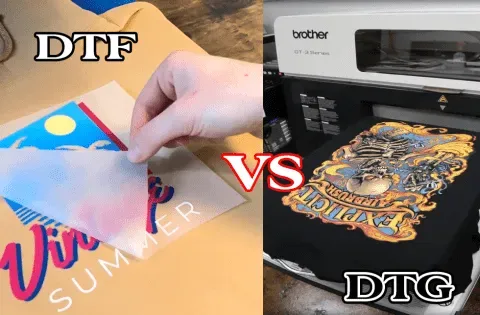
DTF vs DTG is a hot topic for brands weighing how best to print apparel in 2026. Both DTF printing and DTG printing offer vivid colors and durable results, but they differ in fabric compatibility and production economics. Understanding the differences between DTF and DTG helps map to order size, fabric types, and total cost of ownership. This guide explores the core pros and cons, including durability and cost considerations that matter to growing brands. By the end, you’ll know which method aligns with your product strategy and customer expectations.
For a different framing, consider two routes in textile decoration: film-assisted transfers and direct-to-fabric printing. In the film-assisted path, a printed sheet is fused to fabric with heat, aligning with what you might call DTF-style processes. In the direct-to-fabric path, inks are laid directly onto the garment, a method often called DTG or direct-to-garment, depending on the setup. These phrases reflect the same underlying tech in different terminology, supporting the idea that fabric compatibility, texture, and cost considerations drive the best choice. Understanding this dual vocabulary helps designers compare performance, sustainability, and scale across product lines.
DTF vs DTG: Core Technology Differences and Fabric Reach
DTF printing uses a PET film that carries the design with water-based inks, which is then coated with an adhesive powder and cured before transferring to fabric. DTG printing, by contrast, applies water-based textile inks directly onto the garment with a specialty printer, allowing for very high color fidelity on suitable fabrics.
These core differences influence fabric reach and color reproduction. Understanding the differences between DTF and DTG helps explain why each method works best on certain materials. DTF is widely versatile across cotton, poly blends, and synthetics, making it easier to work across diverse fabrics, while DTG tends to excel on 100% cotton and lighter fabrics where direct ink laydown can maximize color fidelity.
Visual Quality and Hand Feel: Which Method Delivers Better Color and Texture
DTG printing excels at ultra-high color fidelity on cotton-heavy garments, delivering smooth gradients and a soft hand feel when applied to suitable fabrics. In contrast, DTF printing offers robust color saturation and reliable transfer quality across a wider range of fabrics, including blends and synthetics, with less sensitivity to fabric variability.
For many brands, the choice hinges on the desired hand feel and fabric mix. DTG often yields a softer touch on cotton, while DTF transfers can feel crisper on some fabrics if process parameters aren’t tuned. This dynamic makes DTG and DTF suitable for different product lines within a single collection.
Cost of DTF vs DTG: An Economic View for 2026 Brands
Upfront costs include equipment, consumables, and ongoing maintenance. DTF systems require a printer capable of film printing, a powder adhesive station, film media, and heat presses. DTG systems require a dedicated DTG printer, pretreatment equipment, and ongoing ink and maintenance costs.
For high-color designs on many garments, DTF can offer a lower cost per unit at scale due to robust transfers and fewer workflow steps, while small cotton-focused runs with photo-like graphics can be more cost-effective with DTG because it avoids film and adhesive materials. Evaluating total cost of ownership over multiple years is essential for a true apples-to-apples comparison.
Durability and Wash Performance Across Fabrics
Durability varies with fabric type, ink chemistry, and curing conditions. In many cases, DTF prints show excellent wash durability on a broad range of fabrics, including blends and poly, once properly cured and applied.
DTG prints can deliver strong durability on cotton and light fabrics, but performance on dark or synthetic fabrics may require pretreatment that affects washfastness and feel. In 2026, formulations for both DTF inks and DTG inks have improved, offering better adhesion, colorfastness, and wash resistance. If your brand requires bold colors on a wide fabric mix, DTF often provides reliable long-term durability; if you prioritize ultra-soft hand feel on cotton and high-detail artwork, DTG remains a strong choice.
Fabric Compatibility and Production Speed for Diverse Product Lines
Fabric choice is a major determinant of which method to use. DTF shines on cotton, poly blends, polyester, and even some synthetics. It performs well on dark and light garments, with smooth color transitions and strong saturation after curing. DTG is exceptional on 100% cotton and light-colored fabrics, where the direct application of ink can yield extremely soft hand feel and precise color rendering.
Production speed and scalability differ: DTF workflows can be highly scalable with efficient film production, transfer stations, and automated heat pressing, often offering faster throughput per unit for complex, multi-color designs. DTG can be faster for very small runs or simple color palettes on cotton, but large, full-color designs on cotton can require longer print times due to ink deposits and pretreatment requirements.
Decision Guide and Hybrid Strategies for 2026 Brand Strategy
If you’re deciding between DTF vs DTG, start with a practical decision framework: what fabrics dominate your line, what order size is typical, how important hand feel is to your brand, and what your total cost of ownership looks like over time. This approach helps identify where each method adds value and where a hybrid approach might reduce risk.
Many brands employ a hybrid strategy, leveraging DTF for multi-fabric collections and DTG for cotton-centric lines to optimize quality, cost, and speed across their lineup. By understanding the differences between DTF and DTG, you can tailor your production roadmap to balance durability, cost, and time-to-market while maintaining consistent brand quality.
Frequently Asked Questions
What are the differences between DTF and DTG printing?
DTF printing uses a PET film printed with water-based inks, then heat-activated adhesive transfers the design to the garment, while DTG printing applies ink directly to the fabric with a textile printer. DTF offers broad fabric compatibility and strong color transfer with a relatively simple setup for complex, multi-color designs. DTG provides ultra-high color fidelity and a very soft hand feel on cotton-heavy fabrics, but often requires pretreatment and careful color management.
DTF vs DTG pros and cons: which method is best for multi-fabric apparel?
DTF printing pros include fabric versatility, strong color transfer on diverse fabrics, and scalable throughput for multi-color designs. Cons can include a crisper hand feel if not tuned and a transfer texture on some fabrics. DTG printing pros include a very soft hand feel and excellent detail on cotton, with drawbacks on non-cotton fabrics and higher costs for small runs due to pretreatment and ink use. In many 2026 workflows, brands use both methods to optimize fabric variety and SKUs.
What is the cost of DTF vs DTG, and which is more cost-effective at scale?
Upfront costs differ: DTF requires a film printer, heat press, powders, and film consumables, while DTG requires a dedicated DTG printer, pretreatment, and ongoing ink costs. For high-color, multi-color designs on many units, DTF can offer a lower cost per unit at scale due to efficient transfers and fewer production steps. For small, cotton-focused runs, DTG can be more cost-effective by avoiding some film and adhesive materials, though pretreatment costs still apply.
How durable are DTF vs DTG prints on different fabrics?
Durability depends on fabric, ink chemistry, and curing conditions. DTF prints often show strong wash durability across a broad range of fabrics (including blends and poly) when properly cured and applied. DTG prints are durable on cotton and light fabrics, with best results on 100% cotton; dark fabrics may require pretreatment that can affect washfastness and hand feel. Both inks have improved in 2026 for colorfastness and adhesion.
Which is better for dark fabrics: DTF printing or DTG printing?
DTF printing is typically more reliable on dark fabrics due to the transfer process, vibrant color transfer, and fewer pretreatment steps. DTG on dark fabrics requires pretreatment and specific inks, which can add cost and affect hand feel. For a broad dark-garment lineup, many brands rely on DTF; DTG is often favored for cotton-heavy, lighter-colored runs.
DTF vs DTG: how do fabric compatibility and hand feel compare?
DTF vs DTG: DTF offers excellent fabric compatibility across cotton, blends, poly, and synthetics, and works well on dark and light garments. DTG excels on 100% cotton and light fabrics, delivering the softest hand feel. Hand feel can be crisper with DTF if transfer parameters aren’t tuned; DTG typically yields a softer finish on suitable cotton fabrics. Choose based on your fabric mix and target product experience.
| Aspect | DTF | DTG | Key Takeaways |
|---|---|---|---|
| Printing surface | Film transfer to garment | Direct-to-fabric printing on the garment | DTF uses a transfer film; DTG prints directly on fabric; which method you choose affects feel and setup. |
| Fabric compatibility | Versatile across fabrics and blends | Strong on 100% cotton or high-cotton blends | DTF is broadly compatible; DTG excels on cotton-rich fabrics. |
| Hand feel / Finish | Can be crisper; transfer texture varies | Very soft hand on cotton-rich fabrics | DTG typically yields a softer hand on cotton; DTF can be crisper depending on setup. |
| Setup & maintenance | Simpler setup; less pretreatment | Pretreatment and color calibration; regular maintenance for printheads | DTF usually easier to start; DTG requires pretreatment and ongoing calibration. |
| Durability & wash | Excellent wash durability across fabrics after proper curing | Strong on cotton; dark/synthetic may need pretreatment for washfastness | Both durable with proper processes; DTF offers broad durability across fabrics. |
| Cost considerations | Lower cost per unit for complex multi-color designs at scale | Higher ink costs and pretreatment; costs rise for small runs | DTF often wins on volume; DTG can be cost-effective for small cotton runs. |
| Production speed / scalability | Highly scalable with film production; fast transfer for complex designs | Fast for small cotton runs; larger cotton designs may take longer | DTF is well-suited for volume; DTG excels in small, cotton-focused orders. |
| Brand fit / use cases | Multi-fabric collections; diverse SKUs | Cotton-focused lines; high color fidelity and soft hand | DTG suits cotton-centric brands; DTF supports diverse fabrics and scale. |
| Environmental & safety considerations | Film-based transfers; controlled activation; VOC considerations vary | Water-based inks; pretreatment; environmental impact depends on process | Both methods are advancing in safety and sustainability; choice depends on inks and workflows. |
Summary
DTF vs DTG: In 2026, choosing between DTF vs DTG depends on your brand’s fabric mix, order size, color complexity, and profitability goals. DTF offers broad fabric compatibility, strong color transfer, and scalable throughput for multi-fabric lines, while DTG excels in ultra-soft hand feel and high-detail artwork on cotton. A hybrid approach—using DTF for some collections and DTG for others—can optimize quality, cost, and speed across your product lineup.